Speed limits in Kenya by road and vehicle
50 km/h in towns, 110 km/h for cars on dual carriageways and 80 km/h for matatus and lorries. Every limit in the Traffic Act, when signs override it, and the fines.
On this page8 sections
Most drivers know the highway limit. Fewer notice when it changes. The moment you pass into a town or trading centre, Kenya's limit drops to 50 km/h, even if the road still looks like a highway.
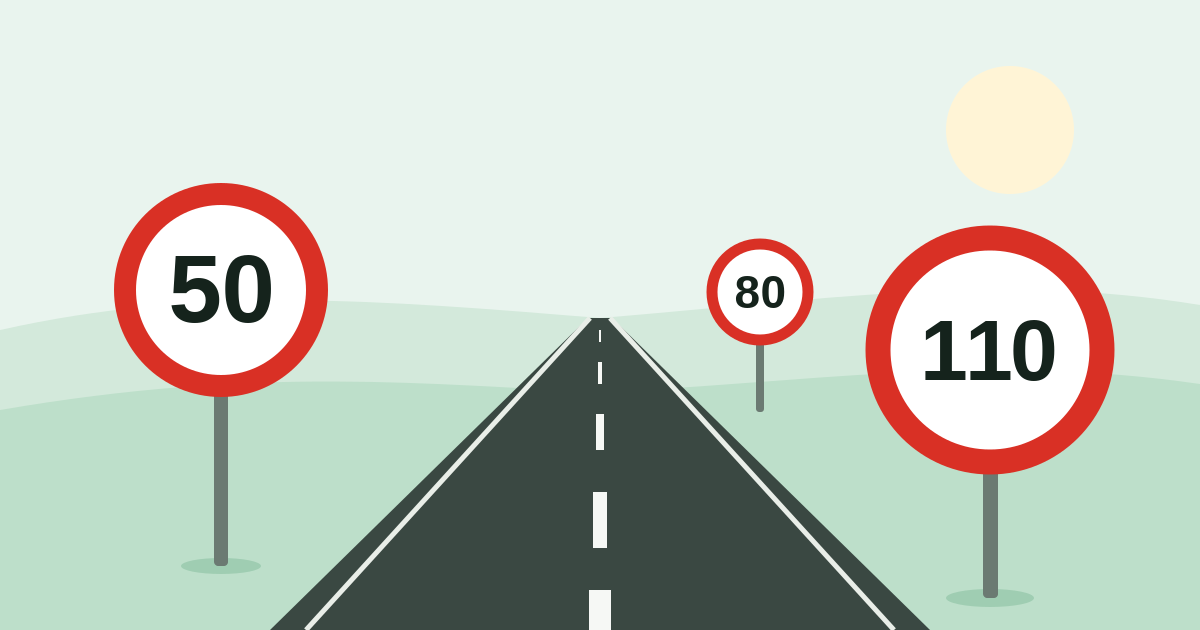
Outside towns, a private car may do 110 km/h on a dual carriageway and 100 km/h on a single carriageway. Matatus, buses and lorries are held to 80 km/h on every road, and a posted sign always overrides the general limit.
What is the speed limit in Kenya?
The speed limit in Kenya is 50 km/h in any town, city or trading centre, 110 km/h for private cars and motorcycles on dual carriageways, and 100 km/h on single carriageways. Matatus, buses, PSVs and commercial vehicles are capped at 80 km/h on any road. Where a sign shows a different limit, the sign applies.
| Vehicle and road | Maximum speed |
|---|---|
| Private car, taxi or motorcycle on a dual carriageway | 110 km/h |
| Private car, taxi or motorcycle on a single carriageway | 100 km/h |
| Matatus, buses and other PSVs, any road | 80 km/h |
| Commercial vehicles and lorries, any road | 80 km/h |
| Articulated vehicles not towing a trailer, any road | 80 km/h |
| Any vehicle towing one trailer, any road | 65 km/h |
| Any road inside a town, city, township or trading centre | 50 km/h |
| A stretch with a speed limit sign | The limit on the sign |
Limits checked against the Traffic Act on 25 November 2026. Sources: the Traffic Act (Cap. 403), section 42 and the Traffic (Speed Limits) Rules, on Kenya Law.
Dual carriageway or single carriageway?
A dual carriageway has a barrier or central reserve between the two directions of traffic. Thika Road, the Southern Bypass and Mombasa Road out of Nairobi are examples. On these roads the default for private cars is 110 km/h.
A single carriageway carries both directions on one road with no divider. That covers most highways outside the big cities, and the default there is 100 km/h.
Taxis and cars normally used for hire count as private cars for these limits. Every other PSV, including matatus and buses, follows the 80 km/h rule.
The 50 km/h limit in towns
Section 42(3) of the Traffic Act sets 50 km/h on any road inside a trading centre, township, municipality or city. It applies whether or not the road has two lanes each way.
The highway authority has to put up signs where the 50 km/h zone starts and ends. On highways that pass through towns, that sign often comes well before the first shops, so slow down when you see it rather than at the first bump.
When a sign sets a different limit
Road authorities can set lower limits on any stretch, either for good or for a while. Common reasons are roadworks, a damaged surface, sharp bends, schools and busy junctions. The Act requires signs at both ends of the lower limit.
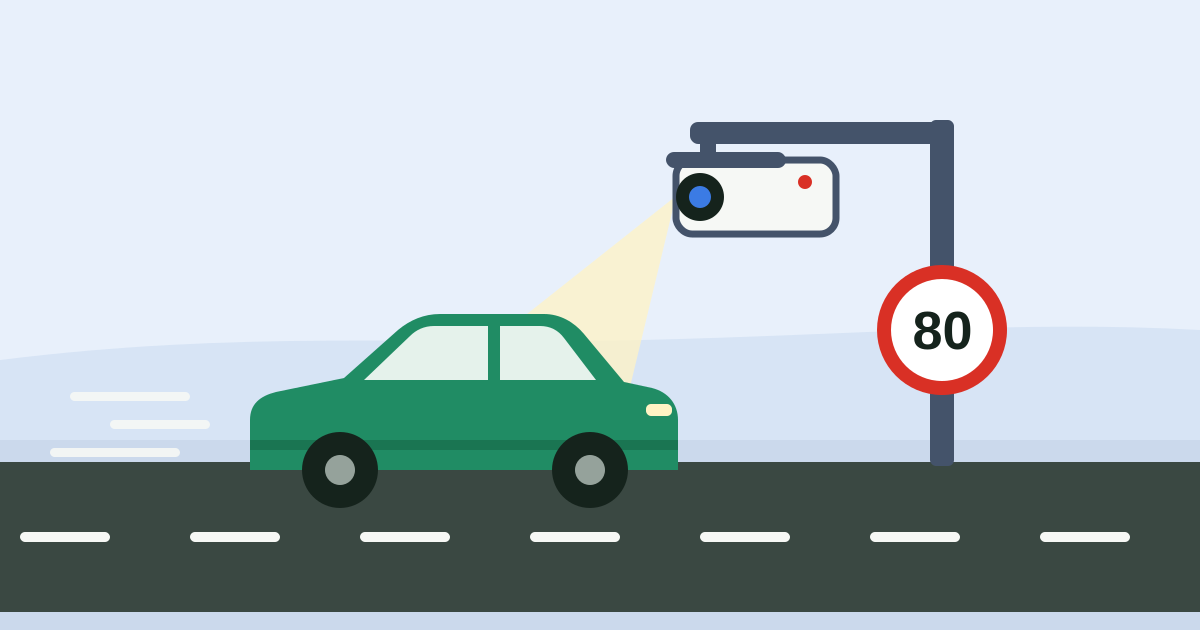
The number on the sign is the legal limit for that stretch. A dual carriageway signed 80 km/h around an interchange is an 80 km/h road there, and cameras and police check you against the sign.
Speed limits for matatus, buses and lorries
Every PSV except taxis, and every commercial vehicle, has a limit of 80 km/h on any road. Towing a trailer brings any vehicle down to 65 km/h.
PSVs and commercial vehicles weighing more than 3,048 kg unladen must also have a speed governor set so the vehicle cannot go faster than 80 km/h. The vehicle has to display a valid speed governor certificate. Driving one without a governor carries an instant fine of KES 10,000. Our guide to speed governors covers which vehicles need one and how the certificate works.
If your pickup or van is registered as a commercial vehicle, the 80 km/h limit applies to you too, even when it is empty.
How much is the fine for speeding in Kenya?
Speeding up to 20 km/h over the limit is a minor offence with a fixed instant fine. Anything more goes to court.
| How far over the limit | Penalty |
|---|---|
| 1–5 km/h | Warning |
| 6–10 km/h | KES 500 |
| 11–15 km/h | KES 3,000 |
| 16–20 km/h | KES 10,000 |
| More than 20 km/h | Charged in court |
Sources: the Traffic (Minor Offences) Rules, 2016, and section 70 of the Traffic Act.
Going more than 20 km/h over a posted limit is serious. On conviction, the Traffic Act sets a fine of at least KES 20,000, at least three months in jail, or both. Three or more such convictions can cost you your driving licence for at least three years.
The full list of fixed penalties, from seatbelts to number plates, is in our guide to NTSA instant fines.
Mistakes that get drivers fined
- Keeping highway speed through a trading centre. The 50 km/h rule applies as soon as you pass the sign, even on a dual carriageway.
- Assuming a dual carriageway means 110 everywhere. Many sections near interchanges and built-up areas are signed lower, and cameras sit on some of them.
- Driving a commercial-registered vehicle like a private car. A pickup registered as commercial is limited to 80 km/h.
- Forgetting the trailer. Towing anything, including a small trailer or caravan, drops you to 65 km/h.
- Missing a temporary sign at roadworks. Lower limits at roadworks are legal limits, not suggestions.
Where the cameras are, and how they measure your speed, is covered in speed cameras in Kenya.
Frequently asked questions
What is the speed limit on Thika Road?
Thika Road is a dual carriageway, so the default limit for private cars is 110 km/h. Several sections near interchanges and built-up areas are signed lower, often 80 km/h. Where there is a sign, that number is the limit. Matatus and lorries are limited to 80 km/h along the whole road.
Is the speed limit 50 km/h on every road in Nairobi?
The default inside any city or town is 50 km/h. Major roads such as Thika Road, Mombasa Road, the Southern Bypass and the Nairobi Expressway have signs that set their own limits on many sections. Follow the posted sign; where there is none in town, assume 50 km/h.
What is the speed limit for matatus in Kenya?
Matatus and all other PSVs except taxis are limited to 80 km/h on any road. They must also be fitted with a speed governor that stops the vehicle going faster than 80 km/h.
What is the speed limit for boda bodas?
Motorcycles follow the same limits as private cars: 50 km/h in towns, 100 km/h on single carriageways and 110 km/h on dual carriageways, unless a sign says otherwise.
Do police warn you for small speeding offences?
Under the instant fines rules, going 1–5 km/h over the limit earns a warning rather than a fine. From 6 km/h over, a fine applies, starting at KES 500.